What a Tanzania Safari Actually Costs, and Where the Money Goes
Two people can visit the same parks, see the same lions, and pay wildly different amounts. Here is an honest breakdown of what drives the price, which costs are fixed by the Government, and where the real savings are.
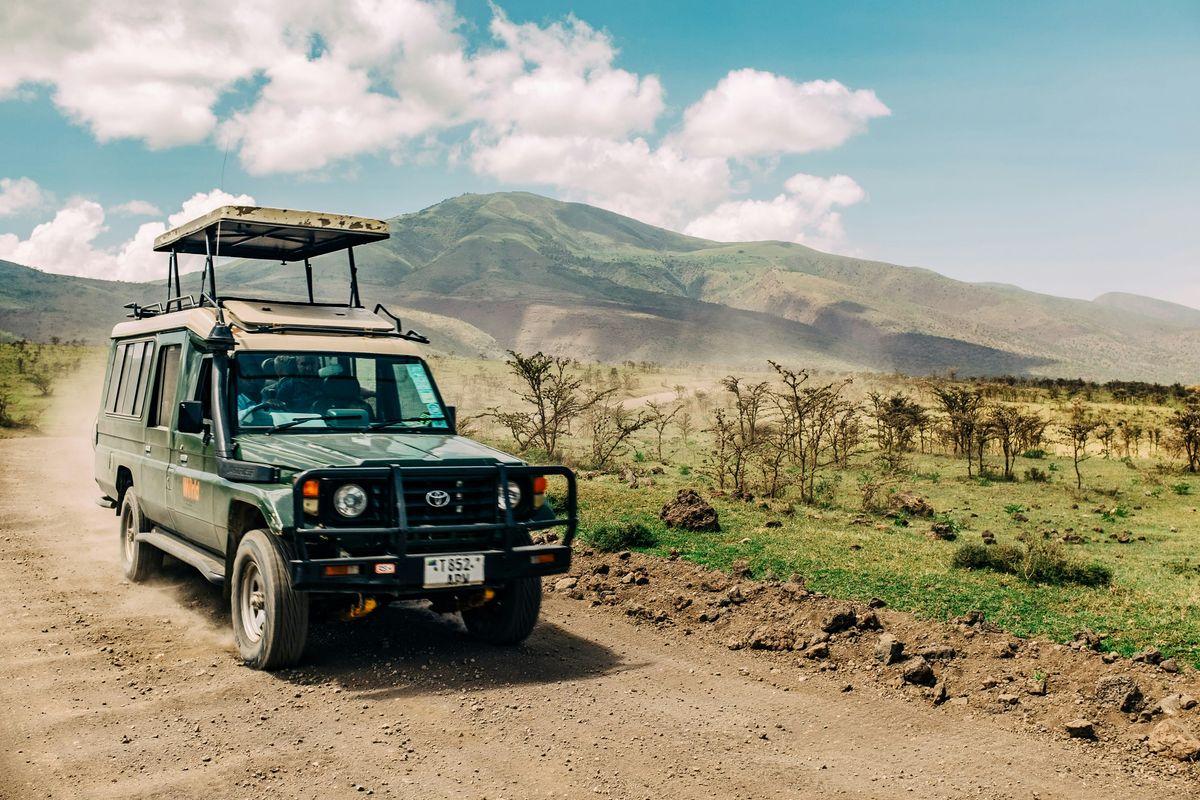
Safari pricing confuses people, and for a fair reason: the range is enormous. Two travellers can do the same northern circuit, see the same animals, and one pays $1,800 while the other pays $12,000.
Both were quoted honestly. The difference is in what the price includes, and understanding that is the difference between feeling well served and feeling overcharged.
The part you cannot negotiate: park fees
Before anyone makes a shilling of profit, the Government takes its share. Park entry fees are set by the Tanzania National Parks Authority and they are identical for everyone.
For the headline parks, Serengeti and the Ngorongoro Conservation Area, entry runs roughly $70 to $83 per adult per 24-hour period, with variation by park and season.
If you sleep inside a park at a lodge or camp, there is typically an additional concession fee of around $60 to $70 per night, which also goes to the park authorities.
For a typical seven-day northern circuit covering Tarangire, Ngorongoro, and the Serengeti, park fees alone usually total $500 to $700 per person.
This matters when comparing quotes. Park fees commonly represent 25 to 40 percent of a budget safari's total cost. A quote that looks dramatically cheaper than others has often simply excluded them, and you will pay them anyway, at the gate.
Always ask directly: are all park fees, concession fees, and crater descent fees included? A straight yes or no tells you a great deal about the operator.
The three tiers, honestly described
Budget camping, roughly $180 to $400 per person per day
You share a vehicle with other travellers on a fixed route. You sleep in public campsites, often with shared bathroom facilities. Meals are simple and cooked by the crew.
A seven-day budget safari typically lands around $1,800 to $3,500 per person, all in.
The wildlife is identical. The lions do not know what you paid. What you are giving up is privacy, flexibility, and comfort.
Mid-range lodges, roughly $300 to $600 per person per day
This is where most international travellers end up, and there is one specific reason it is worth the step up: you usually get a private vehicle and your own guide.
That single change matters more to the actual experience than any upgrade in bedding or food. With a private vehicle, if you find a leopard, you stay with the leopard. On a shared vehicle, you leave when the group schedule says leave.
A seven-day mid-range safari typically runs $2,800 to $4,900 per person.
Luxury and fly-in, $600 to $1,500+ per person per day
Private camps in excellent locations, specialist guides, internal flights replacing long drives, and genuinely exceptional food and accommodation.
A seven-day luxury safari starts around $5,500 and can exceed $10,000 to $15,000 per person.
What you are buying at this tier is largely location and time. The best camps sit in private concessions or remote corners with far fewer vehicles, and flying instead of driving converts travel days back into game-viewing days.
Where the money actually goes
For a typical mid-range safari, the rough shape is:
- Accommodation: the largest single variable, from $30 to $50 per night at a basic campsite up to $800 to $2,500 per person at a top luxury lodge
- Park and concession fees: fixed by Government, non-negotiable
- Vehicle, fuel, and guide: substantial, and the main reason group size changes your price so much
- Food and camp staff
- Operator margin
The lever most people miss: group size
A safari vehicle costs the same to run whether it carries two people or six. The guide is paid the same. Fuel is nearly the same.
This means per-person cost falls sharply as your group grows. A family of four in a private vehicle pays close to what a couple pays for the same vehicle, split across twice as many people. Travelling as four or six is often the single largest saving available to you, larger than any accommodation downgrade.
The other lever: season
Peak season is roughly June to October, aligned with the dry months and the Mara River crossings. Prices are at their highest and the best camps book out far ahead.
The shoulder months, June and November, and the green season, March to May, can be 30 to 50 percent cheaper for a near-identical itinerary.
The trade-off in the green season is real: grass is longer, some roads are harder, and wildlife is more dispersed. But the landscape is beautiful, the parks are quiet, and for many travellers that is a better experience than sharing a sighting with a dozen vehicles.
Costs people forget to budget
- International flights: commonly $800 to $1,500 return from Europe or North America
- Tanzania visa: typically $50 to $100 depending on nationality
- Travel insurance: $50 to $160
- Tips: budget $20 to $30 per day for your guide, plus camp staff. Tipping is a genuine part of safari culture here and forms a real part of guide income
- Drinks, souvenirs, and optional activities such as a hot air balloon flight, which typically runs several hundred dollars per person
The thing nobody tells you about markups
Here is the part that most pricing guides leave out.
When a safari is booked through an international agent or a large foreign booking platform, a significant share of the price is absorbed before any of it reaches Tanzania. Independent analysis of the sector puts the international agent markup at roughly 20 to 30 percent of the total trip cost, covering that agent's overheads and profit.
The trip is still planned, staffed, guided, and delivered by a Tanzanian company. The markup pays for the introduction.
There is a second effect worth knowing about. Because intermediaries typically earn a percentage, they have an incentive to recommend the more expensive option rather than the best-value one. That incentive is not usually visible to you.
Booking directly with a licensed Tanzanian operator removes that layer entirely. The same safari, delivered by the same people, without the introduction fee.
The practical challenge has always been trust: how does a traveller in Berlin or Chicago verify that an operator in Arusha is genuinely licensed, insured, and reputable? That verification problem is the actual reason the intermediary layer exists, and it is exactly the problem Safariconnect was built to solve.
How to compare quotes properly
Ask every operator the same five questions:
- Are all park fees, concession fees, and crater descent fees included?
- Is the vehicle private or shared?
- Which specific lodges or camps, by name, not just "mid-range"?
- How many nights in each park, not days?
- What is not included?
A good operator will answer all five plainly and in writing. Hesitation on question five in particular tells you what you need to know.
Safariconnect
Written in Tanzania
Plan this trip properly
Seven questions, a full day-by-day itinerary in under a minute, and a direct line to a verified Tanzanian operator. No commission, no middleman.
Start Planning